
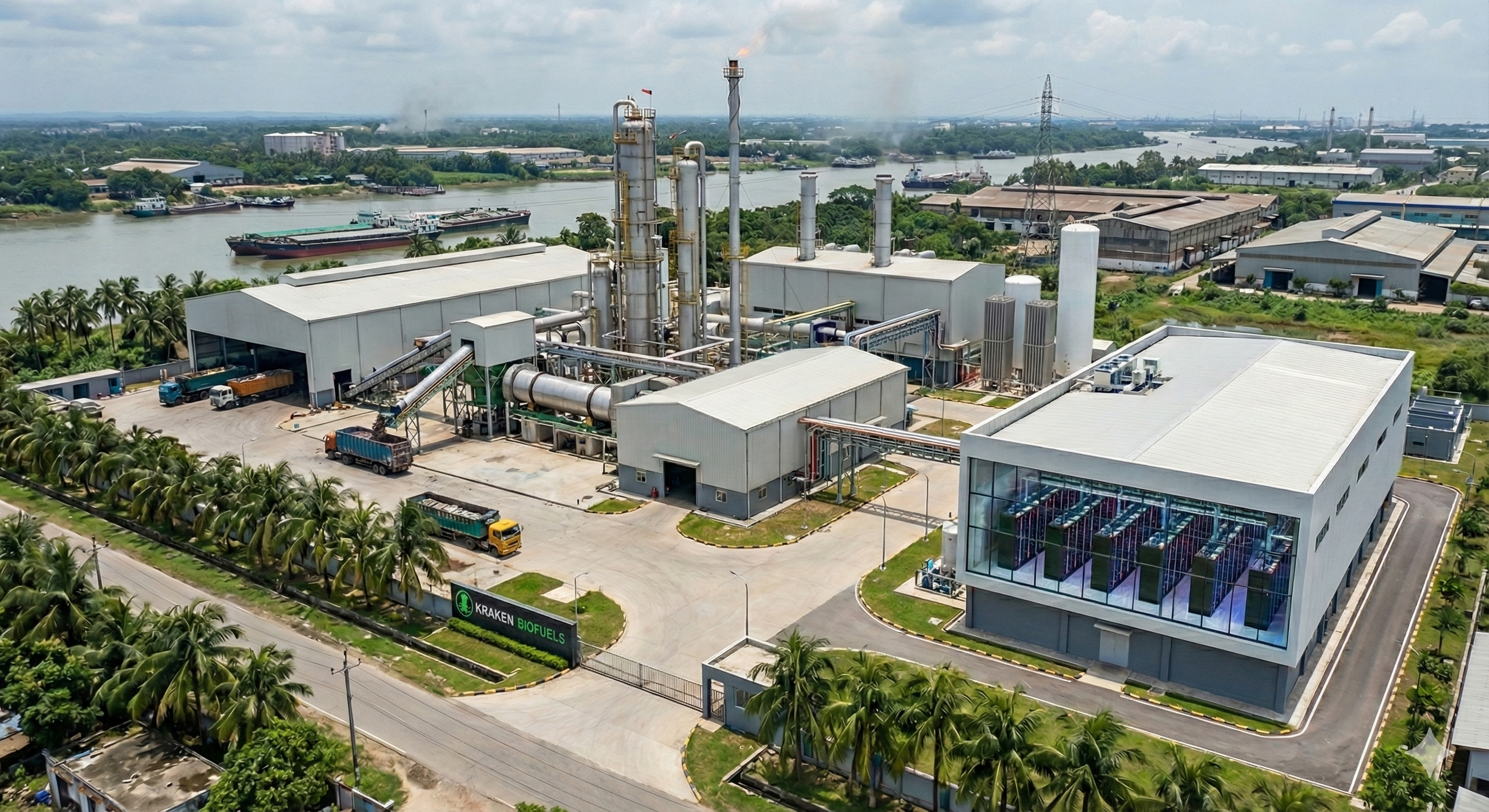
The Site
A first look at our proposed waste-to-energy and AI compute campus. Here, city waste is sorted, dried, and gasified, then transformed into clean power ready to support both the grid and AI compute.
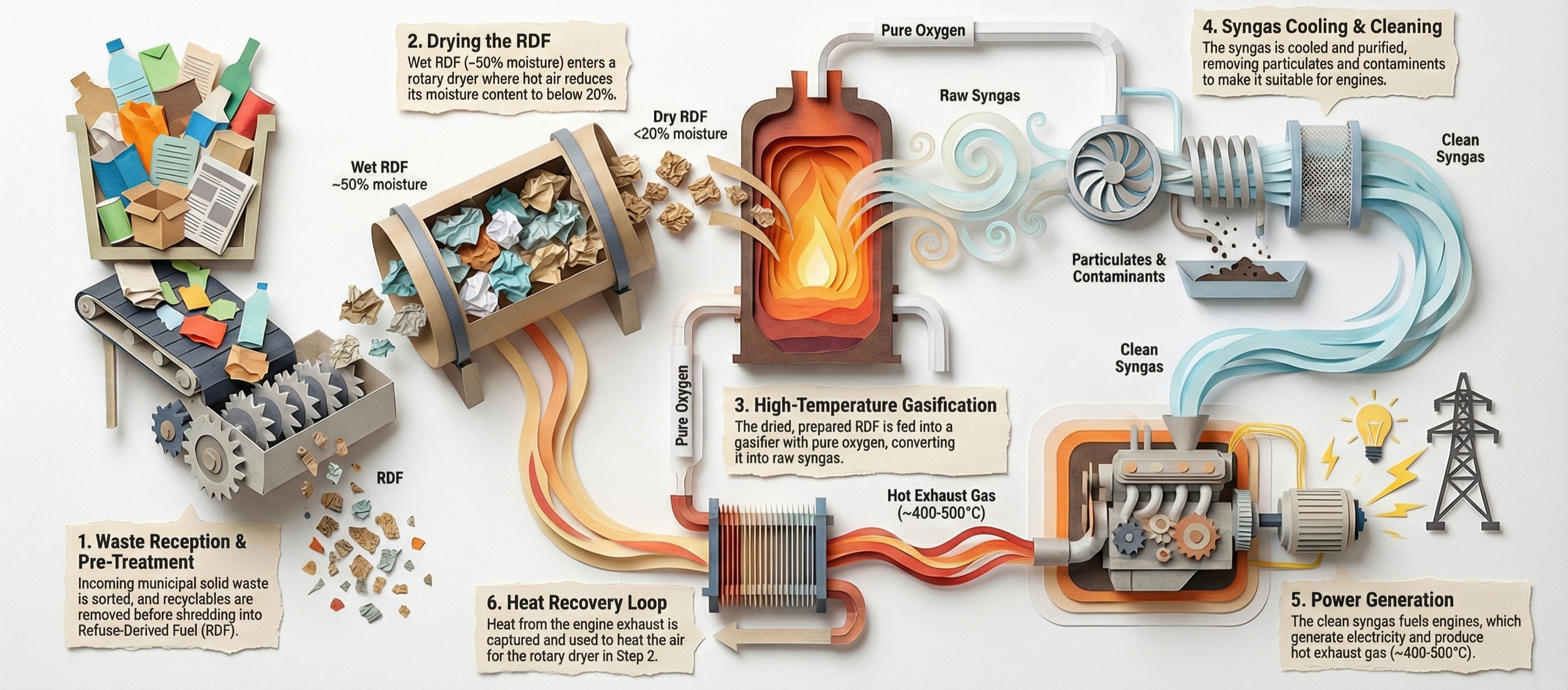
The Process
Think of this diagram as our “trash-to-teraflops” factory tour. Garbage trucks roll in, we strip out the recyclables, toast the rest in a rotary dryer, flash-fry it in an oxygen-fed gasifier, scrub the syngas clean, then feed it to hungry engines that power both the grid and rows of NVIDIA L40S GPUs. Slag becomes stone, waste heat gets reused, and your banana peel quietly helps train someone’s next AI model.
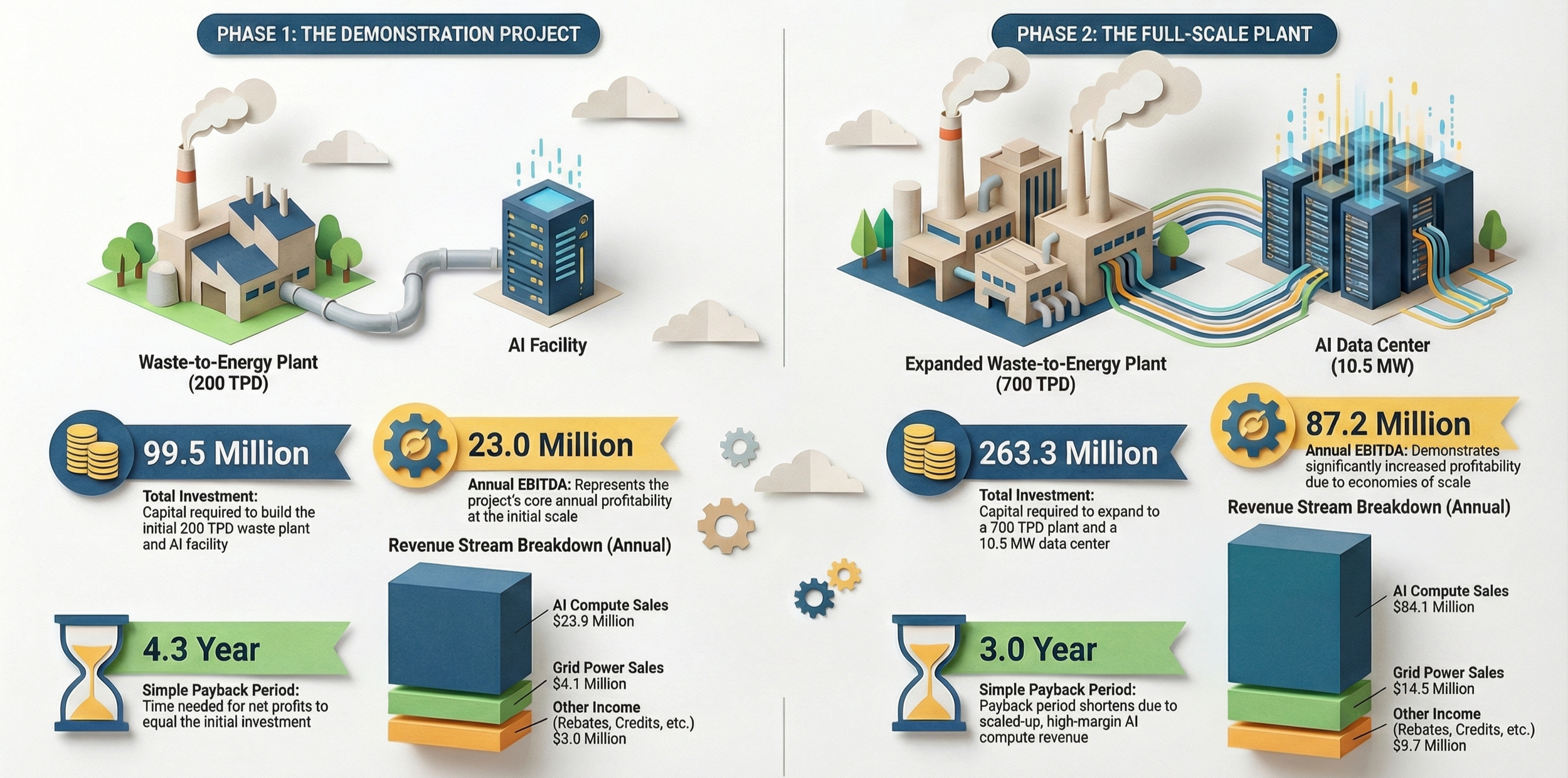
The Math
This is where math gets fun. One side shows our “starter” plant, the other our scaled-up version—but in both cases, trash is paying the bills for both the grid and the GPUs. Two revenue streams, chunky EBITDA, and a payback period measured in just a few years: it’s a balance sheet built on banana peels and teraflops.
Listen Up
Hit play to hear the story behind Kraken BioFuels’ flagship project in Chittagong. This short audio piece walks you through how city waste is collected, sorted, and transformed into clean power—and how that power then feeds a captive NVIDIA L40S–based AI data center. Along the way, you’ll hear simple explanations of the tech, why it matters for Bangladesh, and how turning trash into compute can reshape urban infrastructure for the better.